About me

I am a philosopher of science and cognitive scientist.
I have interests in analogical reasoning (especially in the history of science), philosophy of neuroscience, and philosophy of cognitive science.
I am currently a Postdoctoral Associate at The Rotman Institute of Philosophy investigating analogical reasoning and non-human animal models of neurodegenerative disease.
I am also a member of the Early Learning and Cognition Lab at UCSD, where I study analogical reasoning and re-representation in adults.
You can contact me here.
My research focuses on the role of analogy in scientific practice and theorizing. My approach is practice-oriented, empirically informed, and interdisciplinary, combining historical case studies, qualitative methods, and contemporary cognitive science research. I use this method to situate the practices of particular scientists within their social and historical contexts and illustrate how the psychological consequences of analogical reasoning may have shaped the dynamics of their research.
Analogy and Exploratory Experimentation
Research
Projects
Analogy and Disagreement
Analogy and Animal Models
Analogy and Conceptual Change
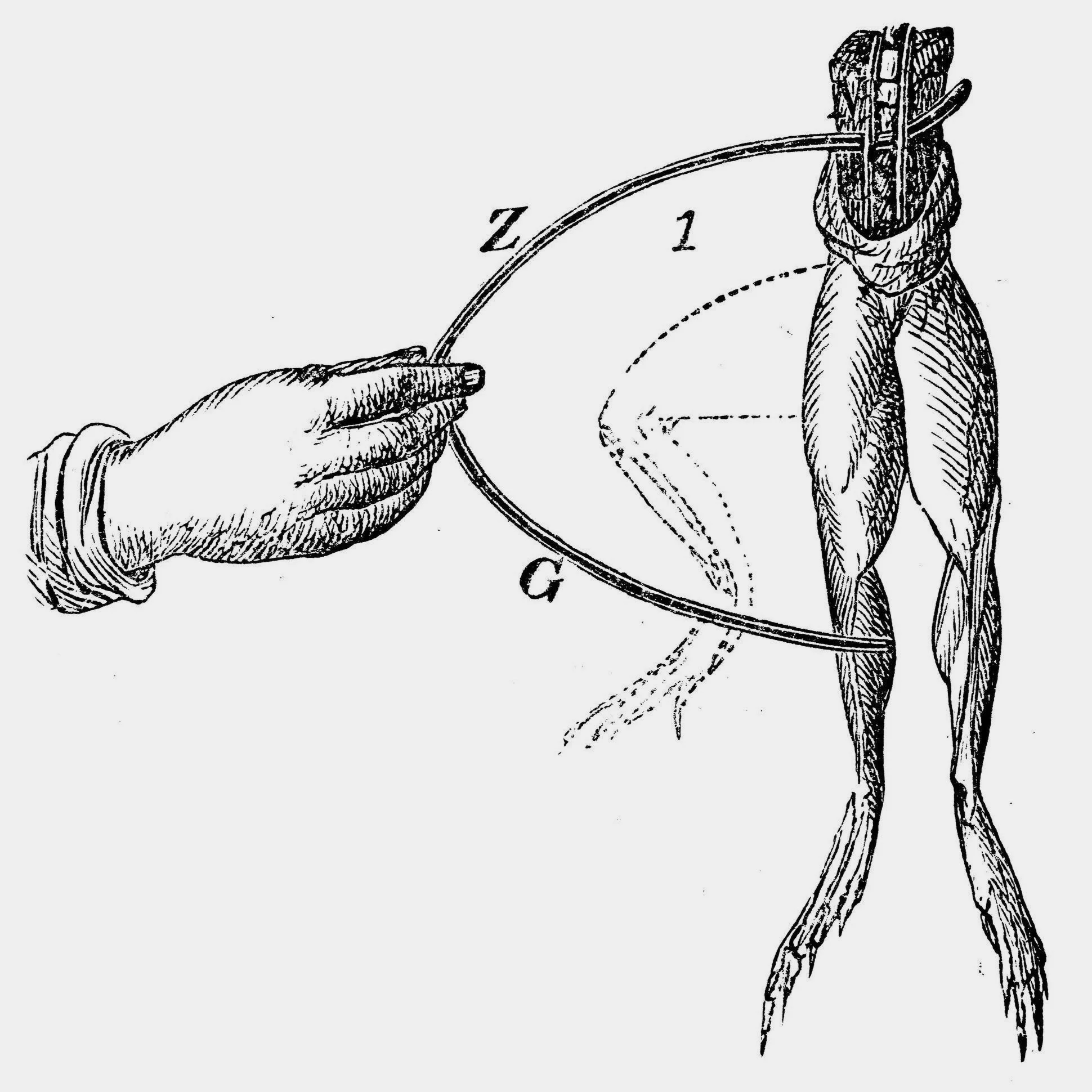
The Animal Leyden Jar: Analogy and Exploratory Experimentation in the History of Electrophysiology (Under Review)
Abstract: In this paper I consider a novel role for analogy in scientific practice. While the importance of analogy as a vehicle for conceptual change and argument by analogy have been widely studied, I argue that analogical reasoning is uniquely suited to guide researchers engaged in exploratory experimentation. To illustrate this point, I provide an analysis of a seminal work in the history of neuroscience: Luigi Galvani’s De viribus electricitatis in motu musculari, Commentarius. Galvani published De viribus in 1791, putting into writing two decades of research on a phenomenon he called “animal electricity.” While contemporary discussions of De viribus tend to focus on two significant and highly influential experiments, the text itself recounts a litany of experimental manipulations which took place over the course of the preceding decade. Little of what Galvani describes of his experimental practice can be easily interpreted as testing a well-defined hypothesis. This, I argue, makes De viribus an excellent example of what contemporary philosophers of science call exploratory experimentation. Another striking feature of De viribus, is the prominent role that analogy plays throughout. Galvani introduces a number of analogies, the most important being the comparison between muscle and the Leyden Jar. While analogical arguments do appear in De viribus, I argue that the Leyden jar analogy actually plays more significant and less appreciated role in Galvani’s research. Specifically, analogies to the Leyden jar and tourmaline both directly inform Galvani’s exploratory experimental practice and provide a means to help interpret his findings.
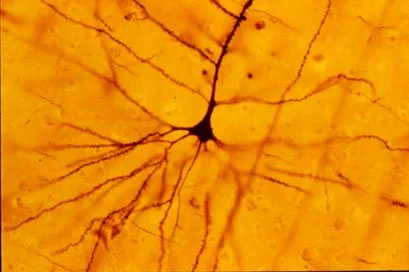
Analogical Anatomy: Neurons, Networks, and the Electric Telegraph (Under Review)
Abstract: It has long been appreciated that analogies can play an important role in communicating complex scientific ideas to lay audiences and can be extremely useful as pedagogical tools. More recently, philosophers and cognitive scientists have begun to consider how analogical reasoning can have an influence on how scientists conceive of and reason about target phenomena. These accounts almost exclusively focus on the positive role that analogy plays in conceptualizing and reasoning about new domains; however, conceptual change in science is not solely a positive matter. In fact, it is often marked by bitter disagreement. In this paper, I argue that while analogy plays a key role in conceptual development and change — both generally and in the sciences — the cognitive processes involved in analogical reasoning can also structure the relevant concepts in such a way as to drive a particularly subtle and intractable species of disagreement. To illustrate this point, I focus on a single episode in the history of neuroscience: the debate between reticularists and neuronists over the adoption of the neuron doctrine. Specifically, I will argue that the evolving concept of the network — which was shaped at different times by different analogies, some explicit, others tacit — helps explain some of the more puzzling aspects of this episode.
Schema Drift: Relational Concepts and Conceptual Change
Abstract: Analogical reasoning is one of the most common ways individuals bring previous experience to bear on unfamiliar situations. Most theories describe this process as a structured comparison that involves mapping the relational properties between a familiar source and unfamiliar target. This both allows the transfer of useful inferences from the source to the target and highlights the common structure shared by both analogs, represented by an abstract schema. This schema can help with identifying and reasoning about structurally similar situations in the future. While researchers have studied how representations of source and target analogs undergo alterations as a result of this mapping process, little attention has been paid to how the abstract schemas thought to guide future analogical reasoning might similarly change with use. We explore this question in three experiments and present evidence that suggests abstract schemas do indeed drift under certain conditions.
Full Paper Available Here.
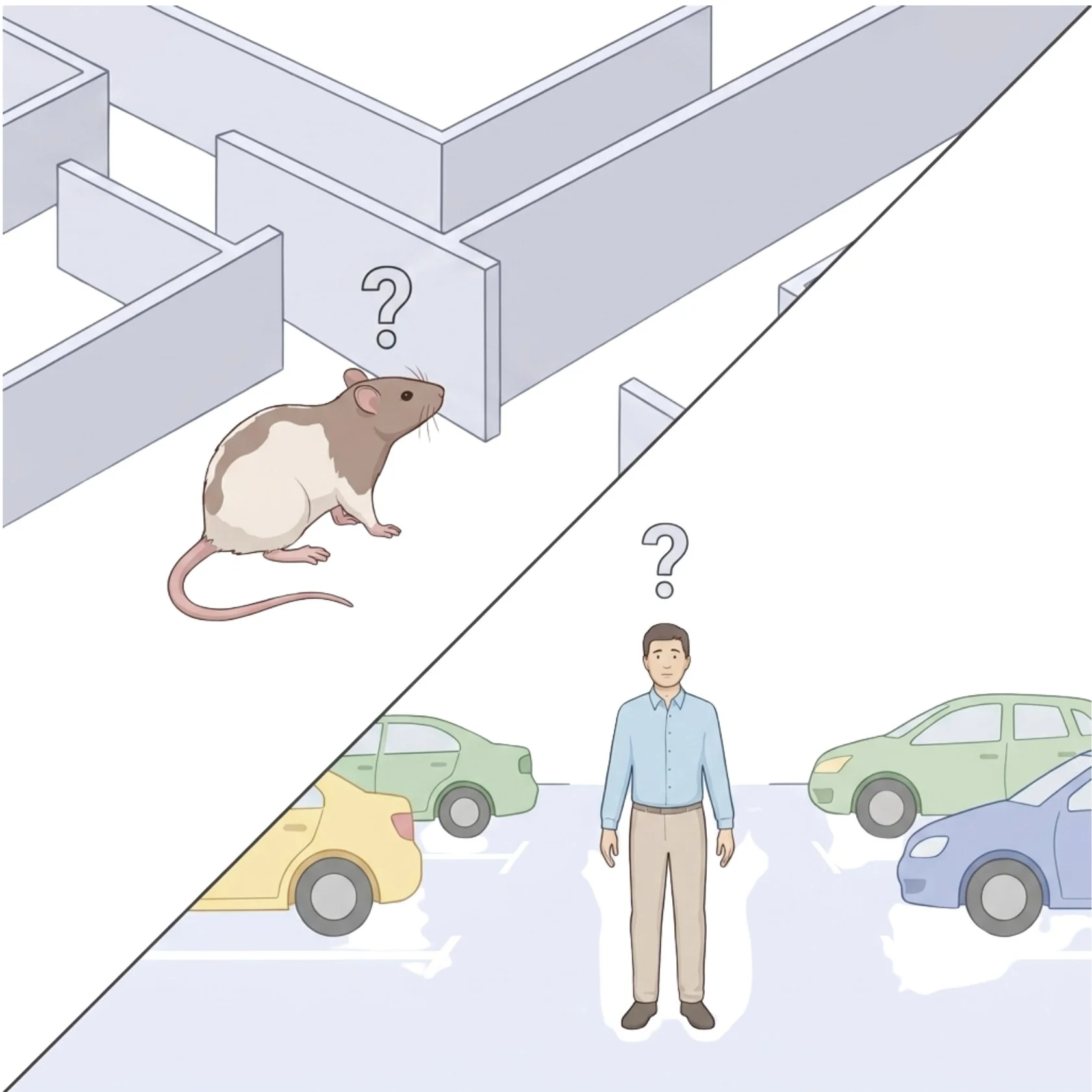
Analogical Reasoning and Animal Models: Structure, Difference, and Disanalogy (In Preparation)
Abstract: Coming Soon!
Publications
Bechtel, W., & Vagnino, R. (Forthcoming). The Spark of Mechanistic Biology in the 19th Century: The Roots of Electrophysiology in History and Philosophy of Modern Science, 1750-1900. ed. Erik Peterson and Elise Crull (London: Bloomsbury).
Vagnino, R., & Olin, L. (2020). [Review of the book Isn’t That Clever: A Philosophical Account of Humor and Comedy, by S. Gimbel]. The Philosophy of Humor Yearbook, 1(1), 285-287.
Vagnino, R. (2019). Afterword. In N. Cartwright, Nature, the artful modeler: Lectures on laws, science, how nature arranges the world and how we can arrange it better (pp. 77-78). (Vol. 23). Open Court Publishing.
For my full CV, click here.